How to Read a River for Fly Fishing Success

Jackson Hole Anglers • August 28, 2026

When the fishing is slow, the fly box comes out. Most of us have stood in a river cycling through patterns, convinced the answer is one size smaller or one shade darker. Often the fly was never the problem. The problem was that there were no trout where the fly was landing.

Reading water is the skill that fixes this, and it is genuinely learnable. Rivers repeat themselves, and once you know what a riffle, a run, a seam, and a good piece of structure look like, you can walk up to water you have never seen and pick out the likely spots before you string the rod. This guide covers how.

Where in the River do Fish Live

  • Trout need three things at once: shelter from current, food drifting past, and cover from predators. Water offering all three holds fish.
  • Stop and watch for a few minutes before you wade. Most anglers spook the closest fish on the walk in.
  • Runs are the highest percentage water on most rivers and the right place to start.
  • Seams and foam lines are a free map. Foam collects where food collects.
  • Read depth by color: light water is shallow, dark water is deep. Judge current against walking pace.
  • One boulder usually creates three lies, in front, beside, and behind.
  • Change your depth and position before you change your fly.

What Reading the River Means

Reading water means looking at a river and working out where a trout can sit comfortably while food comes to it. That is the whole idea. Trout are not distributed evenly through a river, and most of the water in front of you holds nothing at all.

A fish needs three things at the same time. It needs shelter from the current, because fighting fast water all day costs more energy than it can replace. It needs access to food, which means being close to the flow that carries insects downstream. And it needs cover from predators, whether that is depth, broken surface, an undercut bank, or the shade of a boulder.

Any spot offering all three is worth a cast. A spot offering only one usually is not. Once you start looking at rivers through that filter, the amount of water you need to fish shrinks dramatically, and that is the point.

Start by Watching the Water

The most useful thing you can do on arriving at a river is nothing at all. Stand back from the bank and watch for a few minutes. It feels like wasted fishing time and it is the opposite.

Look for current speed and how it varies across the channel. Look at clarity, which tells you how close you can get and how visible your leader will be. Watch for rising fish, which answers the question outright, and for bugs in the air or crawling on the rocks at your feet. Birds working the surface are often onto a hatch before you notice it.

Stay back while you do it. Trout in the first ten feet of water are frequently the easiest fish of the day, and they are also the ones most likely to be sent scattering by a silhouette on the bank or a wading boot in the shallows. Approach low, move slowly, and fish the near water before you wade through it.

The Main Types of Trout Water

Most rivers cycle through the same four water types, over and over, in roughly the same order. Learn to recognize them and you have a framework you can apply to any river anywhere. Each one fishes differently and asks for a slightly different approach.

Riffles and Broken Water

Riffles are the shallow, choppy sections where water runs quickly over cobble and the surface breaks into small standing waves. They matter for two reasons. That turbulence pulls oxygen into the water, and the rocky bottom is where most aquatic insects live, so riffles are the pantry of the river.

The broken surface works in your favor. A trout looking up through choppy water sees a distorted view of the world, which means you can get closer and cast with less finesse than a smooth pool would tolerate.

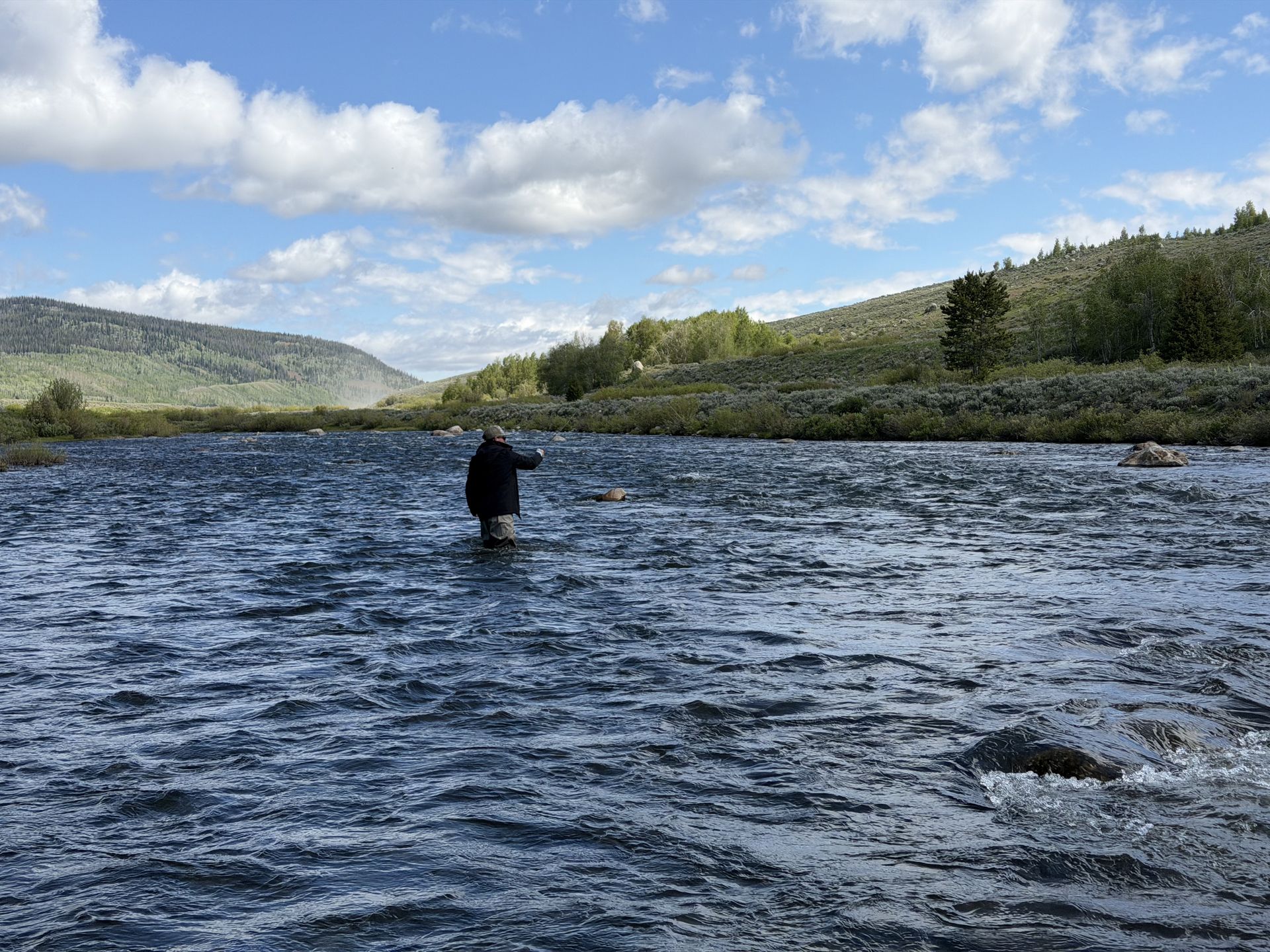
Fish are not sitting out in the fastest current, though. Look for the small depressions, the pockets between larger cobbles, and the slightly deeper slots where a fish can hold below the main push while food tumbles past overhead. The tail of a riffle, where it deepens into a run, is reliably one of the best few feet of water on the river.

Runs and Feeding Lanes

A run is what a riffle becomes as it deepens and settles: moderate depth, steady even current, usually a walking pace flow with a smoother surface than the riffle above it. If you have limited time on unfamiliar water, start here. Runs are the highest percentage water on most rivers, and it is not close.

Trout in a run stack up in feeding lanes, which are narrow ribbons of current carrying the most food. Several fish often hold in the same lane at different depths, with the largest usually lowest and at the front. This is why a run can produce three or four fish from what looks like the same cast.

Fish a run methodically rather than randomly. Work the closest lane first, cover it from top to bottom, then extend a few feet and repeat. Anglers who catch consistently in runs are usually just covering them in order while everyone else casts to the middle.

Pools and Deep Holding Water

Pools are the deep, slow sections that look the most fishy and are often the hardest to fish. They hold trout, including some of the largest in the river, but slow clear water gives a fish a long, undistorted look at your leader and plenty of time to decide against it.

The productive parts are usually the ends rather than the middle. The head of the pool is where faster water dumps in, carrying food and oxygen, and fish position there to intercept it. The tailout, where the pool shallows and accelerates back into the next riffle, concentrates drifting food into a narrowing throat and often holds actively feeding fish in surprisingly thin water.

Approach a tailout from below and stay low, because the fish there are shallow, exposed, and easily spooked. The deep middle is worth a nymph or a streamer if you have time, but it is rarely where the day is won.

Pocket Water Behind Boulders

Pocket water is the fast, boulder strewn stuff that many anglers walk straight past on the way to something that looks more like a river. It rewards the people who stop.

Every large rock creates more than one lie. There is a cushion of soft water directly in front of it, where current piles up and deflects, which surprises people. There are calm slots along both sides. And there is the obvious pocket behind, where the flow closes back together. One good boulder can hold three fish in three separate spots.

The fishing is close range and short. Cast a few feet above the pocket, get a drift of a yard or two, then pick up and move on, because the current will drag your fly out of the soft water almost immediately. Keep your rod tip high and much of your line off the water. Fish in pocket water make quick decisions, and a good trout can come out of a target the size of a bathtub.

Finding Seams and Foam Lines

A seam is the line where fast water meets slow water, and it is the single most valuable feature to learn to see. Look for a visible crease on the surface, a line where the texture changes, or a difference in how the water carries debris. Seams form beside every boulder, along the edge of every riffle, wherever a side channel rejoins the main flow, and down both sides of a run.

They matter because they solve a trout's problem exactly. The fish sits in the slow side, spending very little energy, with its nose inches from the fast side delivering food. That is why the best fish in a run is so often within a foot of a seam rather than out in the middle of it.

Foam lines are the same information made obvious. Foam collects where the current converges, and the current that gathers foam is the current that gathers insects. A foam line is a free map of where the food is going, drawn on the surface for you. Follow it downstream with your eyes and you have found the feeding lane before making a cast.

Position matters as much as the target. Set up so your line lands on the slower side of the seam rather than across the fast water, because a line dropped in quick current will pull your fly off the lane within a second or two. Casting slightly upstream and across, then mending as needed, buys the drag free drift that seam fish expect.

Structure That Holds Trout

Structure is anything that interrupts the flow: boulders, submerged logs and root wads, undercut banks, drop offs where the bottom falls away, bridge pilings, and the leading edge of a gravel bar. Each one breaks the current and provides cover, which is two of a trout's three requirements in a single object.

The habit worth building is to see one piece of structure as several separate targets. A submerged log has a cushion at its upstream end, a slack pocket behind it, and a seam running along each side, and each of those can hold a different fish. Anglers who make one cast at a logjam and move on are leaving most of it unfished.

Undercut banks deserve particular attention because they are so easy to overlook. On an outside bend, the current excavates the bank and leaves a shelf of overhanging turf with deep, shaded water beneath it. That is prime holding water for a large trout, and it often sits within a rod length of where you are standing. Fish it before you wade past it.

Reading Depth and Current Speed

Depth is easier to judge than most beginners expect, because the river shows it in color. Light tan and pale green water is shallow enough to see the bottom. As depth increases the color deepens toward blue green, then to a darker slate. A distinct line where pale turns dark marks a drop off, and drop offs are excellent holding water.

For current speed, use your own walking pace as the yardstick. Water moving at a comfortable walk is roughly the speed trout prefer to feed in. Water moving faster than a brisk walk is usually too quick for a fish to hold in comfortably, though it may be exactly what delivers food to a fish tucked beside it. That is the pattern to hunt for: slower water immediately next to faster water.

Depth and speed together decide your rig more than your fly choice does. Deeper, faster water needs more weight and a longer drift to get down. Shallow riffles need very little and a shorter leader. Getting the fly to the right level is usually the adjustment that turns a slow morning around.

Flows change what you are reading week to week, particularly through runoff and into late summer, so it is worth checking current river flows and conditions before a trip rather than assuming the river looks the way it did last time.

How Seasons Change Your Read

The same river asks different questions at different times of year, and a read that worked in September can be entirely wrong in June. This is the part that catches out visiting anglers who did their research in the off season.

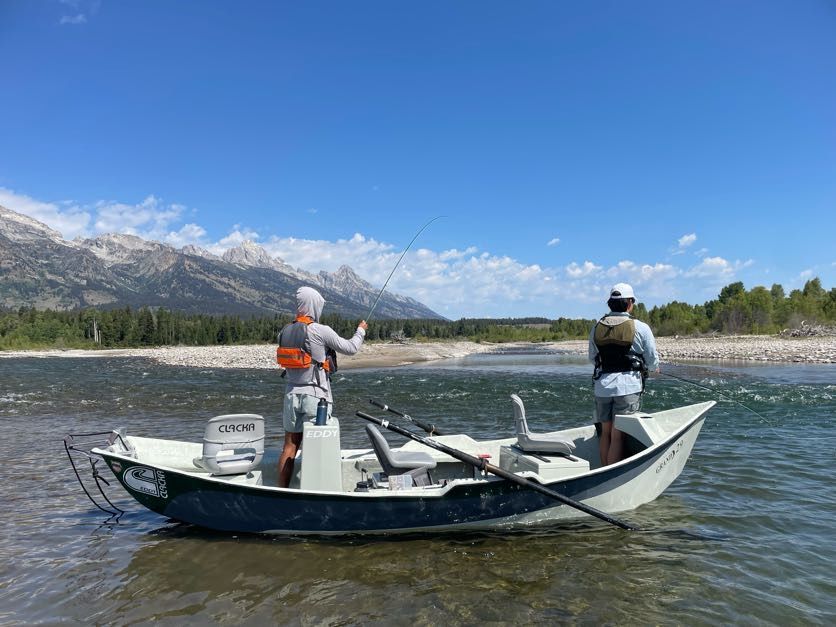
During high runoff, the main channel can be moving too hard for a trout to hold anywhere in it. Fish push to the soft edges, into flooded margins, behind any structure that breaks the flow, and tight to the banks, sometimes in water you could stand in. Anglers fishing the Snake River through a heavy melt often catch within a few feet of the bank while the middle of the river holds nothing at all.

As flows drop through late summer, the river concentrates. Shallow riffles that held fish in June may be too thin and too warm, and trout gather in the deeper runs, in shaded pockets, and near cold water inflows. As water temperatures climb, they also move into faster water than they would choose in cooler conditions, because broken current carries more oxygen and delivers more food. The same stretch that spread fish across the whole channel now holds them in a handful of places, which makes reading water more valuable, not less.

Cooler autumn water spreads them out again. Fish become willing to hold in the shallower, more exposed water they avoided in the heat, and water you wrote off in August is worth another look in October. Nothing here is a schedule, since every year runs differently, but the direction of travel is consistent.

Cold Winter Flows concentrate fish, They will be found in pools and deeper runs with slow to moderate speed. If you find one fish there are likely others with them.

Common Water Reading Mistakes

Everyone makes these, usually for years. None of them is a sign of a bad angler, and all of them are quick to fix once you notice the pattern.

  • Wading through the best water. The near bank and the shallow margin often hold the most catchable fish. Fish the water you are about to stand in before you stand in it.
  • Casting into the middle of the pool. The deep center looks the most promising and is usually the least productive part. Work the head and the tailout instead.
  • Ignoring the bank side lies. Undercut banks, overhanging willows, and a foot of shade against the grass are classic holding spots that get passed over because they look too shallow or too close.
  • Changing flies before changing depth or position. If the drift is wrong or the fly is riding too high, a new pattern changes nothing. Adjust weight, angle, and where you are standing first.
  • Fishing the water instead of the seam. Covering a run evenly across its whole width spreads your effort. Find the seam and the foam line, then fish those.
  • Moving too fast. A run rewards several passes at different depths far more than it rewards one cast before walking to the next pretty spot.

If you take one of these away, make it the first. More fish are spooked by anglers walking into position than are ever caught from the middle of the river.

Ready to Fish with Jackson Hole Anglers?

Reading water is one of those skills that reads clearly on the page and then clicks properly the first time somebody points at a stretch of river and says where the fish is sitting and why. Watching it happen a few dozen times in a day compresses several seasons of trial and error, which is most of what a guided fly fishing day gives an angler beyond the fishing itself.

Our guides read the Snake, the Salt, the Green, and Flat Creek daily through the season, and each of those rivers rewards a slightly different eye. If you want a sense of which water suits how you like to fish, or how the rivers tend to run at the time of year you are traveling, ask our guides a question before you finalize plans.

In the meantime, the next time the fishing goes quiet, leave the fly box alone for ten minutes. Look at the water instead, find the seam, and put your next cast where a trout would actually choose to be.

Share this article

Recent Posts

Close-up of a speckled fish tail on icy snow, with orange-edged fins and white ice crystals.
By Jackson Hole Anglers August 14, 2026
A visual guide to the cutthroat, brown, rainbow, brook, and lake trout swimming in Jackson Hole rivers, with the markings that separate each one.
An angler cradling a large trophy trout on a western river
By Jackson Hole Anglers August 12, 2026
A trophy trout trip trades numbers for size. Here is what a guided day covers, from techniques and gear to seasons, realistic catch rates, and fish handling.
Person releasing a silver trout into shallow water from a boat
By Jackson Hole Anglers August 7, 2026
How to land, hold, unhook, photograph, and release a trout with the least stress, including air exposure limits and the temperatures that raise risk.
A fly angler wading a clear river to reach rising trout in Jackson Hole
By Jackson Hole Anglers August 1, 2026
Selective trout refuse sloppy casts. A guide to reading rise forms, matching the hatch, drag-free drifts, stealthy approaches, and the right leader setup.
A guide rowing a drift boat with anglers casting on a western river
By Jackson Hole Anglers July 24, 2026
Walk and wade or float fishing? A breakdown of how each trip works, plus the skill, fitness, cost, water, and group factors that point to the right choice.
A fly angler holding a large trout on a western river
By Jackson Hole Anglers July 15, 2026
Streamers pull the biggest trout from western rivers. A guide to reading water, rigging sink tips, choosing patterns, working retrieves, and setting the hook.
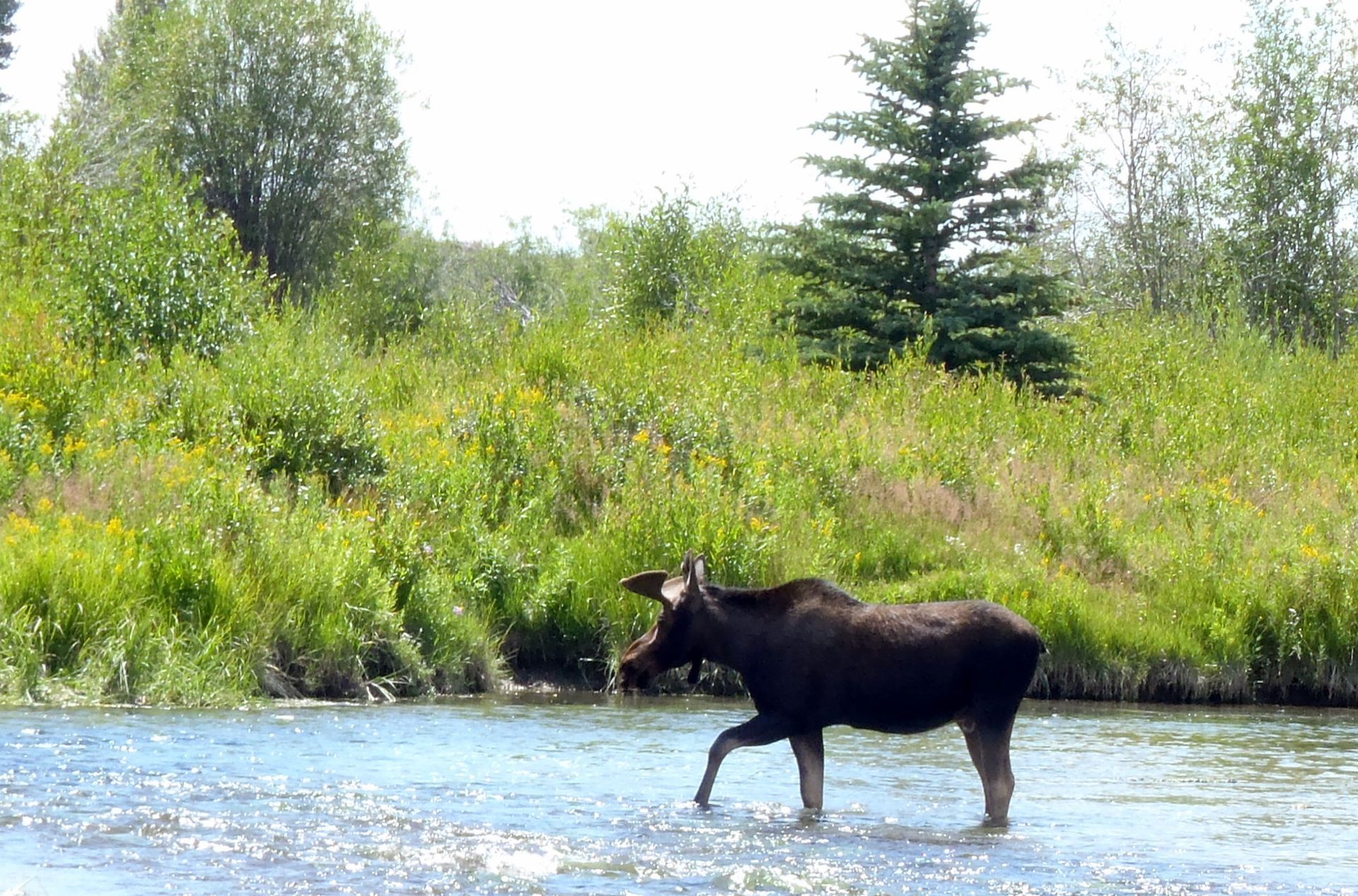
A moose standing in a shallow river among willows in Jackson Hole
By Jackson Hole Anglers June 26, 2026
A look at the moose, eagles, otters, and other animals anglers commonly see along Jackson Hole rivers, plus when and where sightings are most likely.
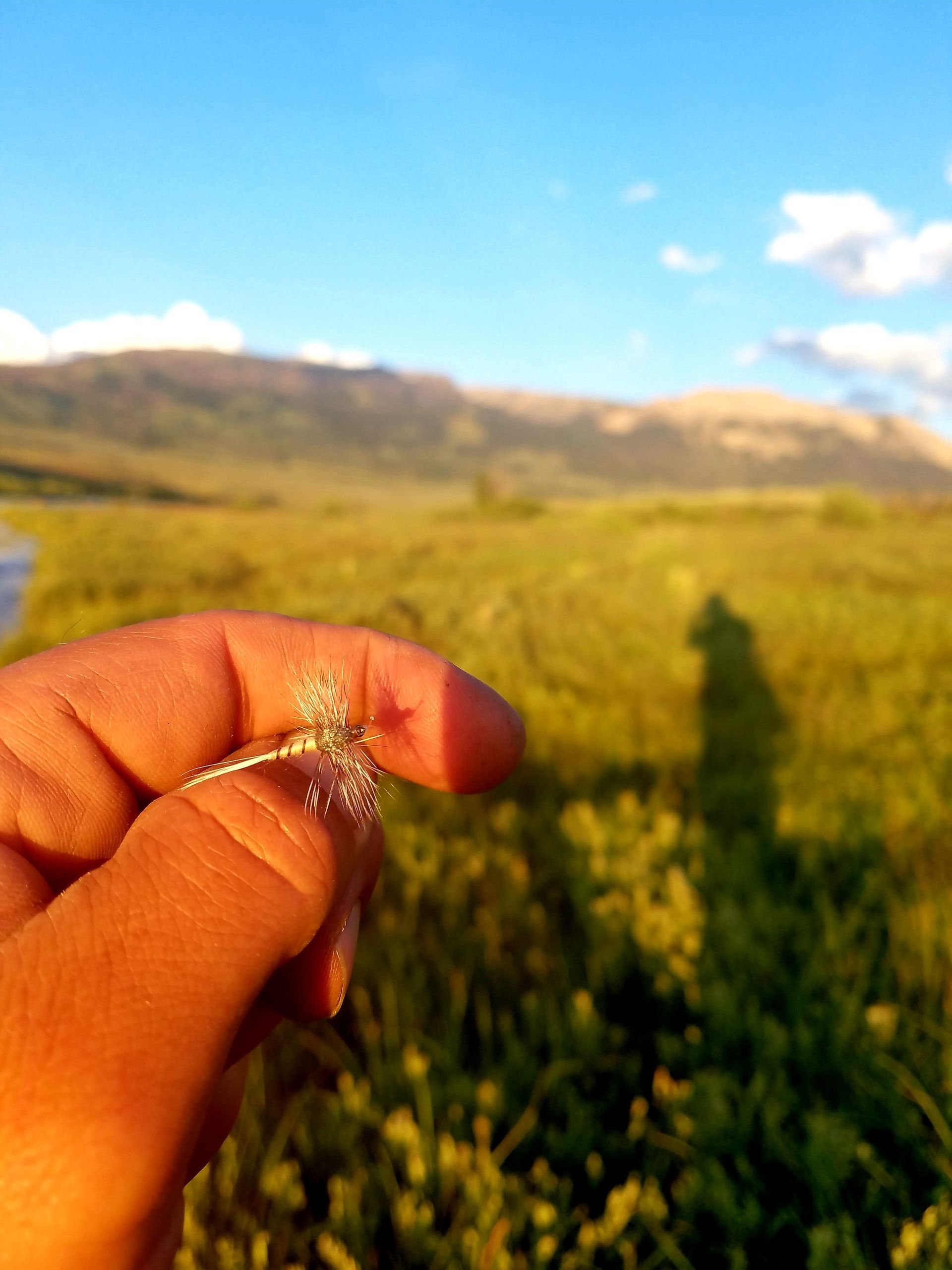
A large gray mayfly spinner in the anglers hand
By Jackson Hole Anglers June 15, 2026
A practical guide to the gray drake hatch, covering timing, slow-water habitat, evening spinner falls, and the fly patterns that bring big trout up.
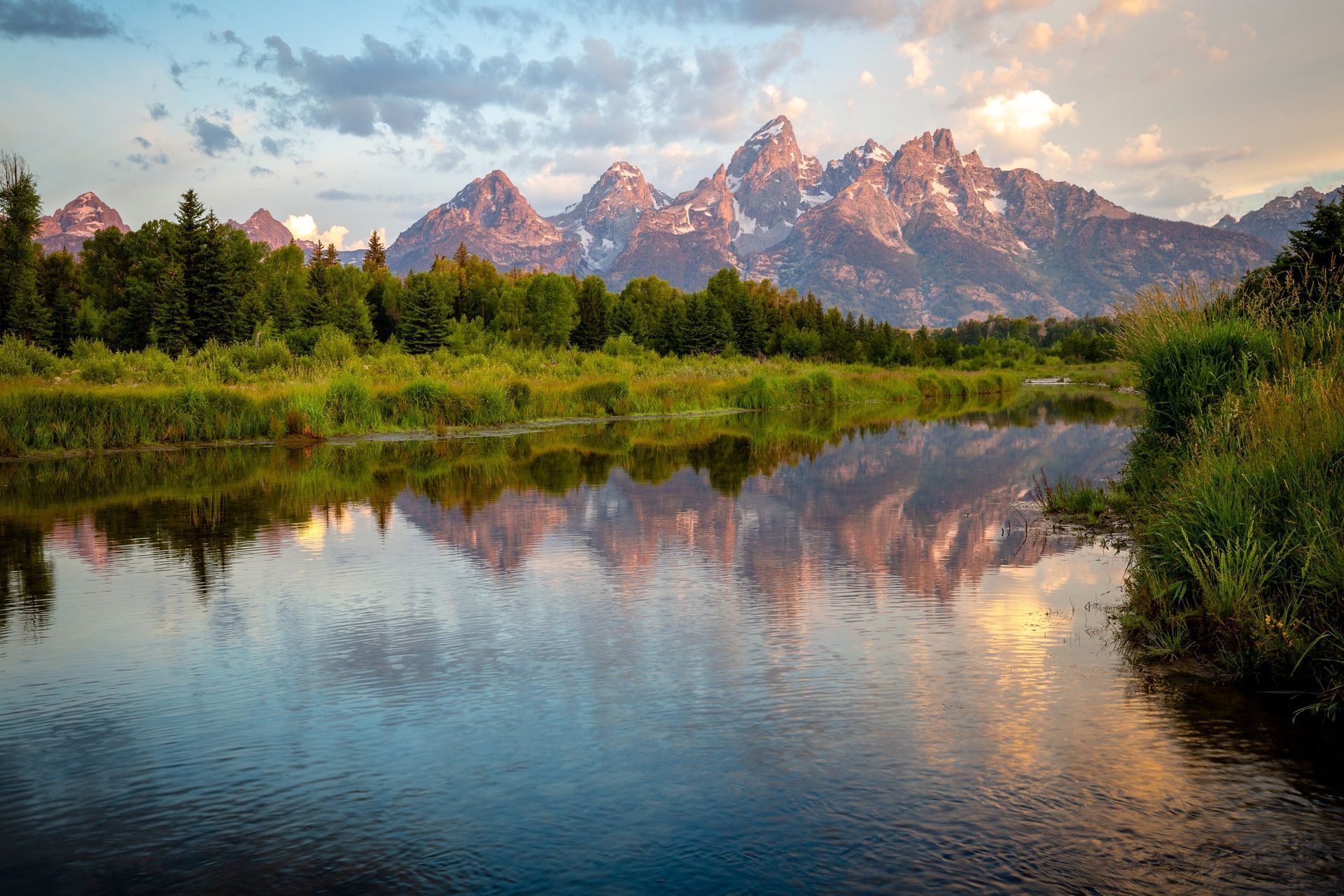
The Snake River winding through Jackson Hole with the Teton mountains in summer
By Jackson Hole Anglers June 2, 2026
A month-by-month look at summer fly fishing around Jackson Hole, covering peak rivers, hatches, packing tips, and what to expect from June through August.
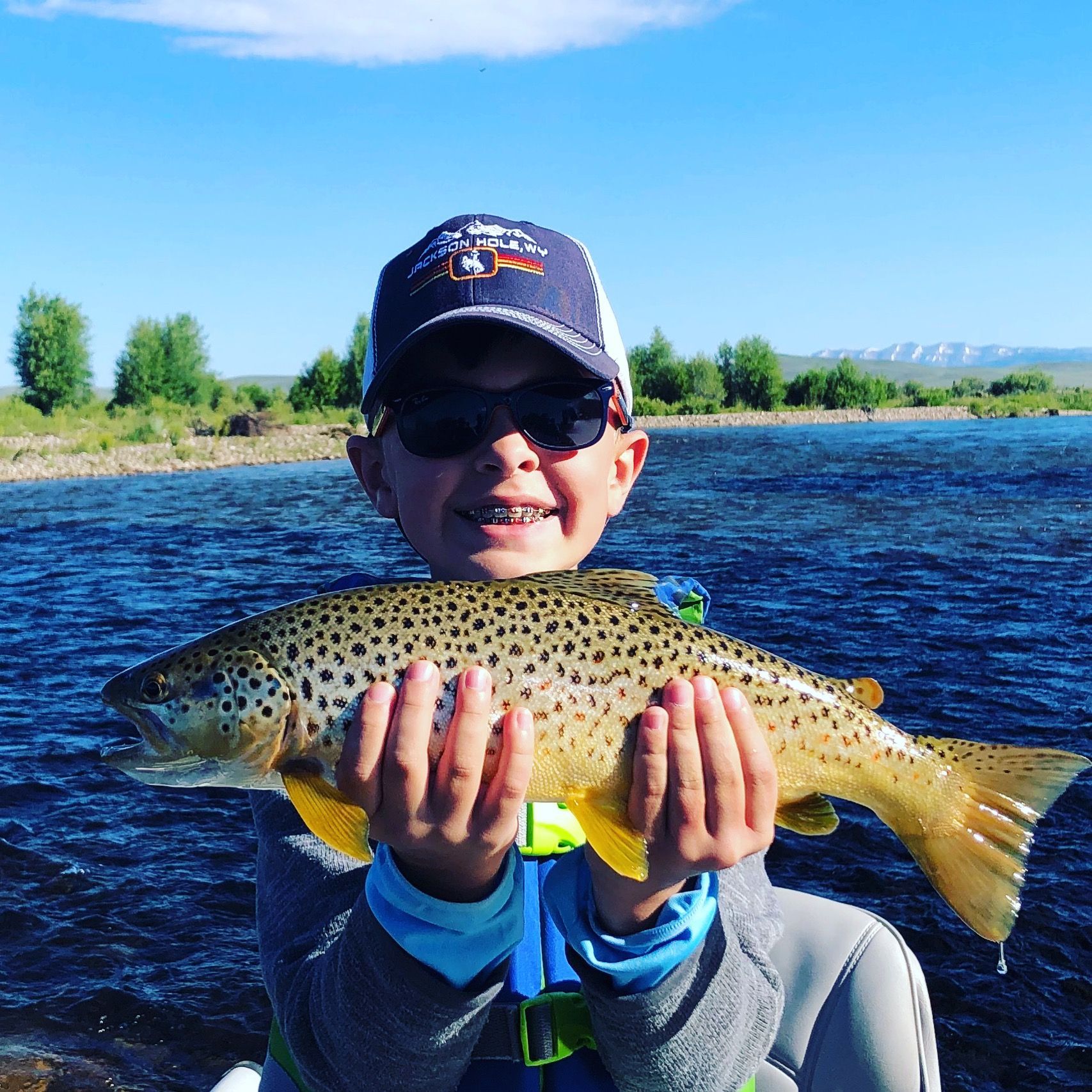
A parent and child fly fishing together on a clear Jackson Hole river
By Jackson Hole Anglers June 1, 2026
A practical guide for parents introducing kids to fly fishing in Jackson Hole, covering the right age, gear, trip length, and tips to keep children engaged.