How to Identify Trout Species in Jackson Hole Waters
There is a particular pause that happens with a fish in the net. It is beautiful, it is clearly a trout, and you have no idea which one. Somebody asks what you caught and the honest answer is that you are not sure.
Telling Jackson Hole trout apart is easier than it looks, because each species carries one or two markings that give it away. This guide starts where the region does, with the native cutthroat that made these rivers famous, and works through everything else you are likely to land.
TLDR
- Check the throat first. An orange or red slash under the jaw means cutthroat, or a cutthroat cross.
- Snake River finespotted cutthroat wear a dense scatter of tiny black spots across the whole body. They are the signature fish of this valley.
- Yellowstone cutthroat share the slash but carry fewer, larger spots, concentrated toward the tail.
- Brown trout show black and rust red spots with pale halos and a squared tail that is nearly spotless.
- Rainbow trout have a pink stripe, heavy fine spotting into the tail, and no throat slash.
- Cutbows carry both a faint slash and a pink stripe. Read the combination, not any single marking.
- Mountain whitefish are not trout, and they are not a problem. They are native, and they indicate clean cold water.
Why Species Identification Matters
Naming the fish in your net is not trivia. Regulations on some Western waters are written species by species, with different rules attached to native fish than to introduced ones, so knowing what you are holding is part of fishing legally rather than just fishing well.
It changes how you handle the fish, too. Recognizing that the trout in your hands is a wild native, part of a population that no hatchery restocks, tends to shorten the photo and speed up the release. That awareness is most of what separates a fishery that holds up over decades from one that quietly thins out.
Trout You Will Catch Here
A short list of species accounts for almost every fish caught around Jackson, and each one has a giveaway or two. Learn the markings below and you will be able to name most fish in the few seconds it takes to slip the hook out.
Snake River Fine Spotted Cutthroat
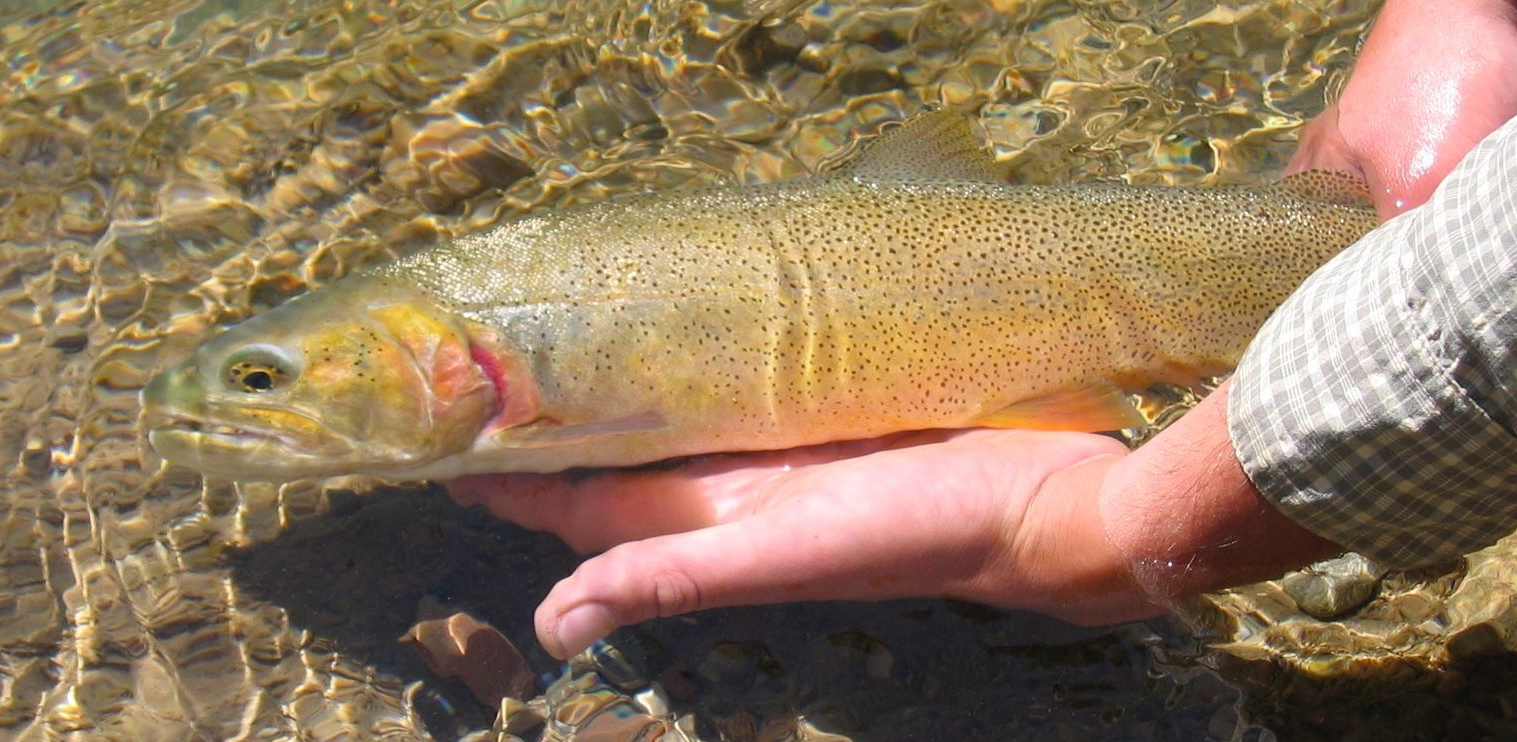
This is the fish of the valley and the one most visiting anglers come to catch. The marking that names it is the spotting: a dense, even scatter of very small black spots covering the whole body, from behind the gill plate all the way to the tail, rather than clustering anywhere in particular. Hold one in good light and the spots look almost peppered on.
The body underneath is golden to olive, often with a warm brassy cast along the flank, and there is an orange to red slash under each side of the lower jaw. That slash is the cutthroat signature and the first thing to look for on any fish.
Worth knowing: the finespotted cutthroat is treated as a distinctive local variety of Yellowstone cutthroat rather than a separate species. That takes nothing away from it. It is a fish with a spotting pattern found in very few places on earth, and this is one of them.
Yellowstone Cutthroat Trout
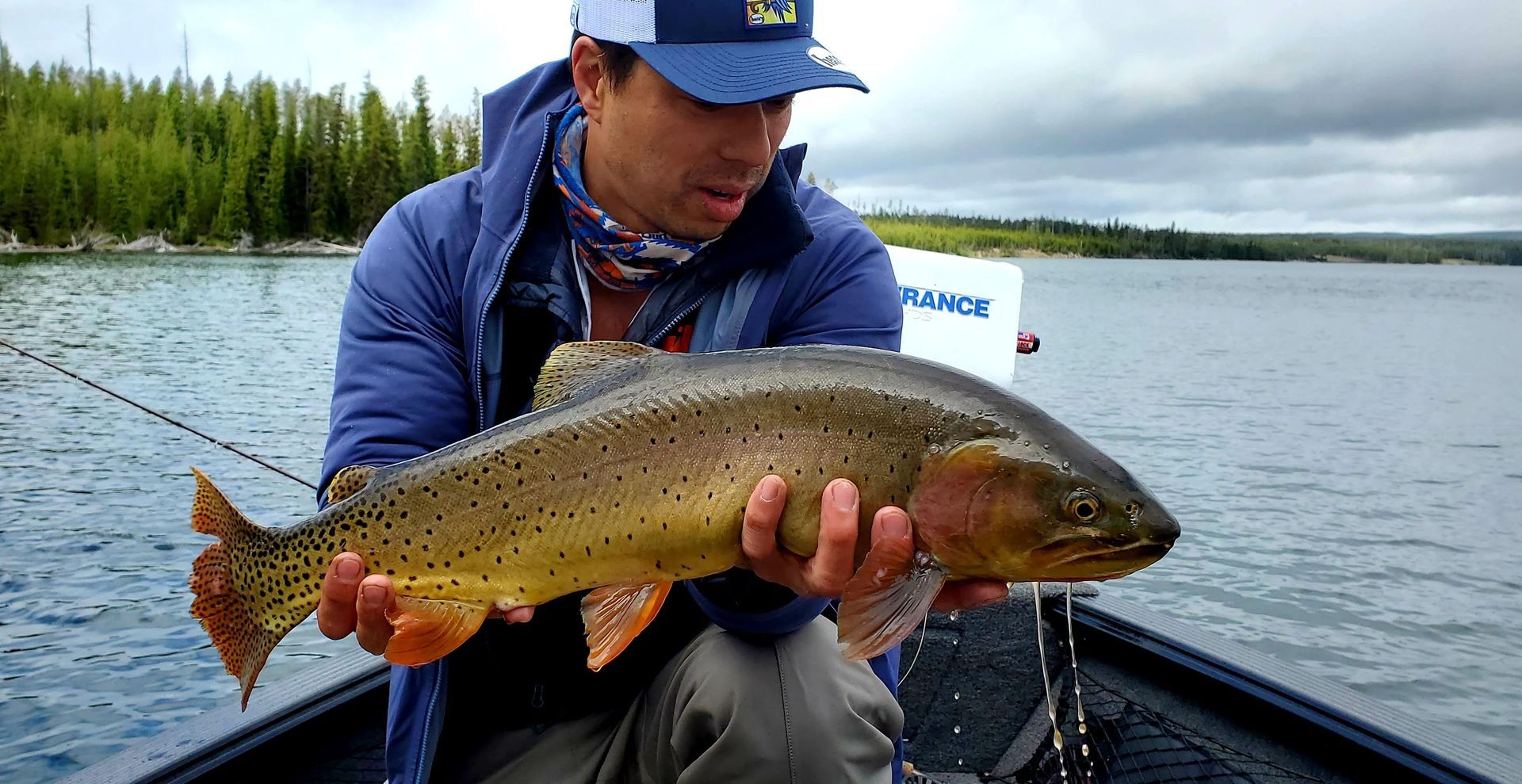
Same orange slash, different spots. Where the finespotted fish is peppered evenly, a Yellowstone cutthroat carries fewer and noticeably larger spots, and they concentrate toward the back half of the body and the tail. The front of the fish can look almost clean by comparison.
Body color runs golden yellow to olive, sometimes with a rosy wash on the gill plate. You are most likely to meet one in park waters and in the drainages east and north of the valley, where it is the native cutthroat.
Brown Trout
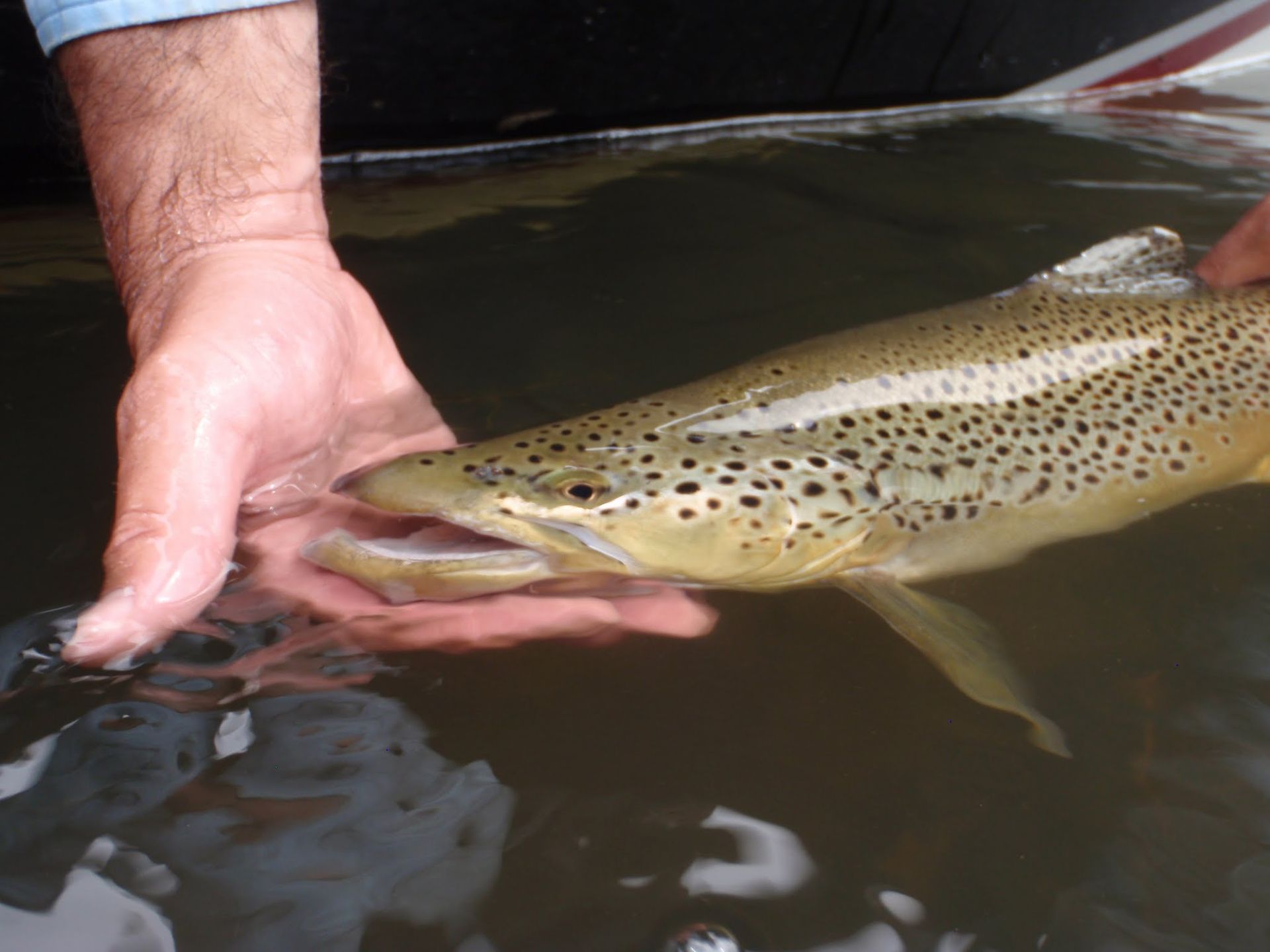
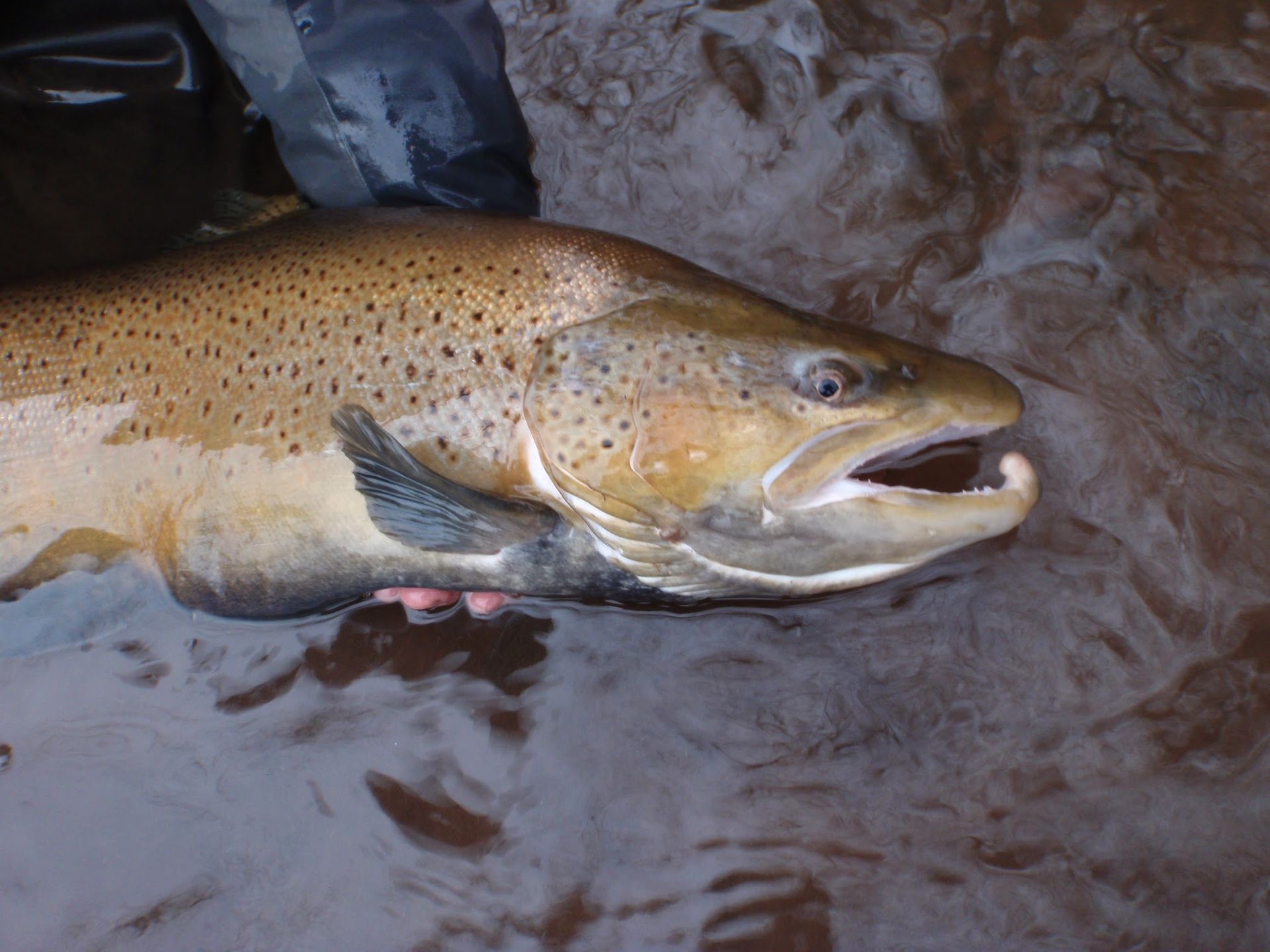
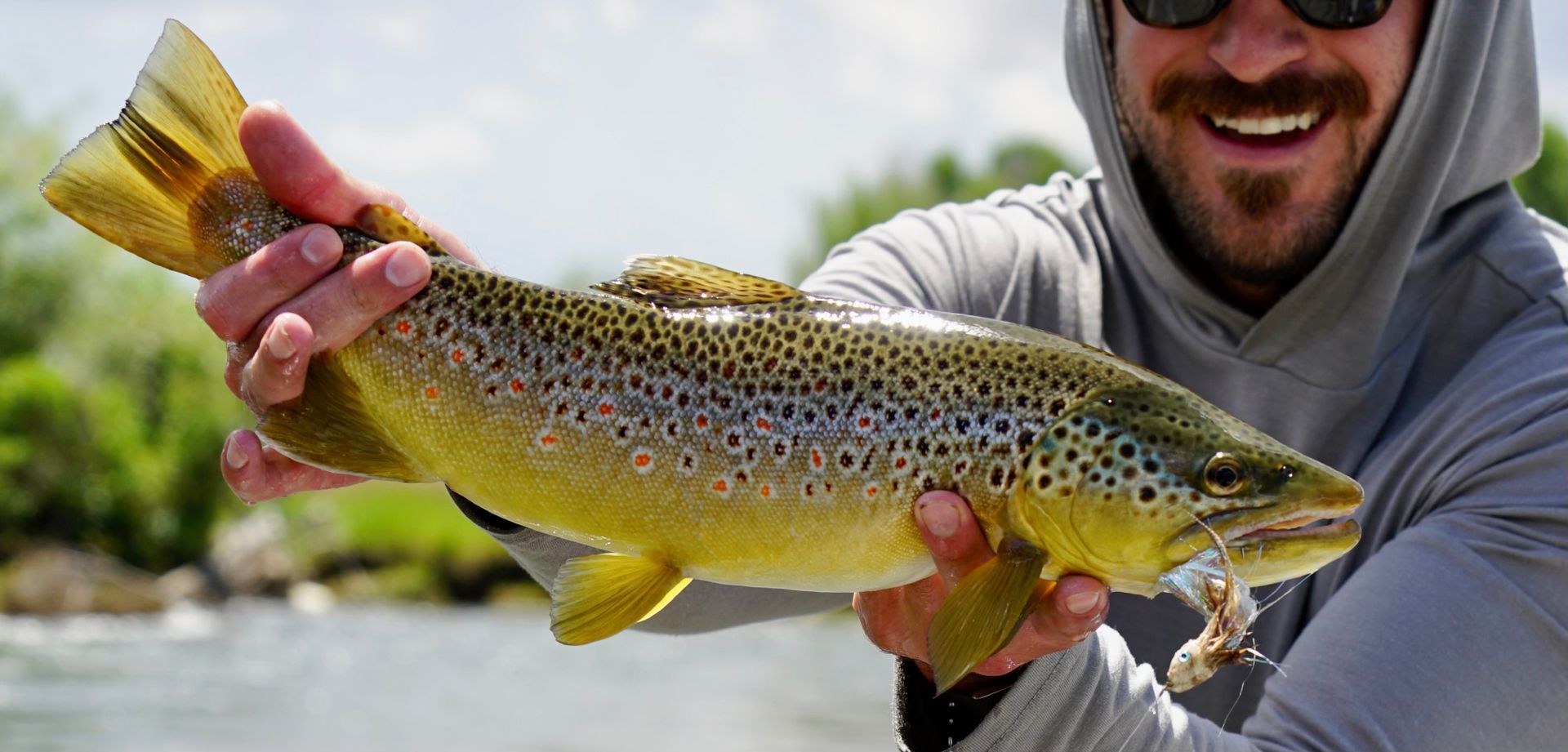
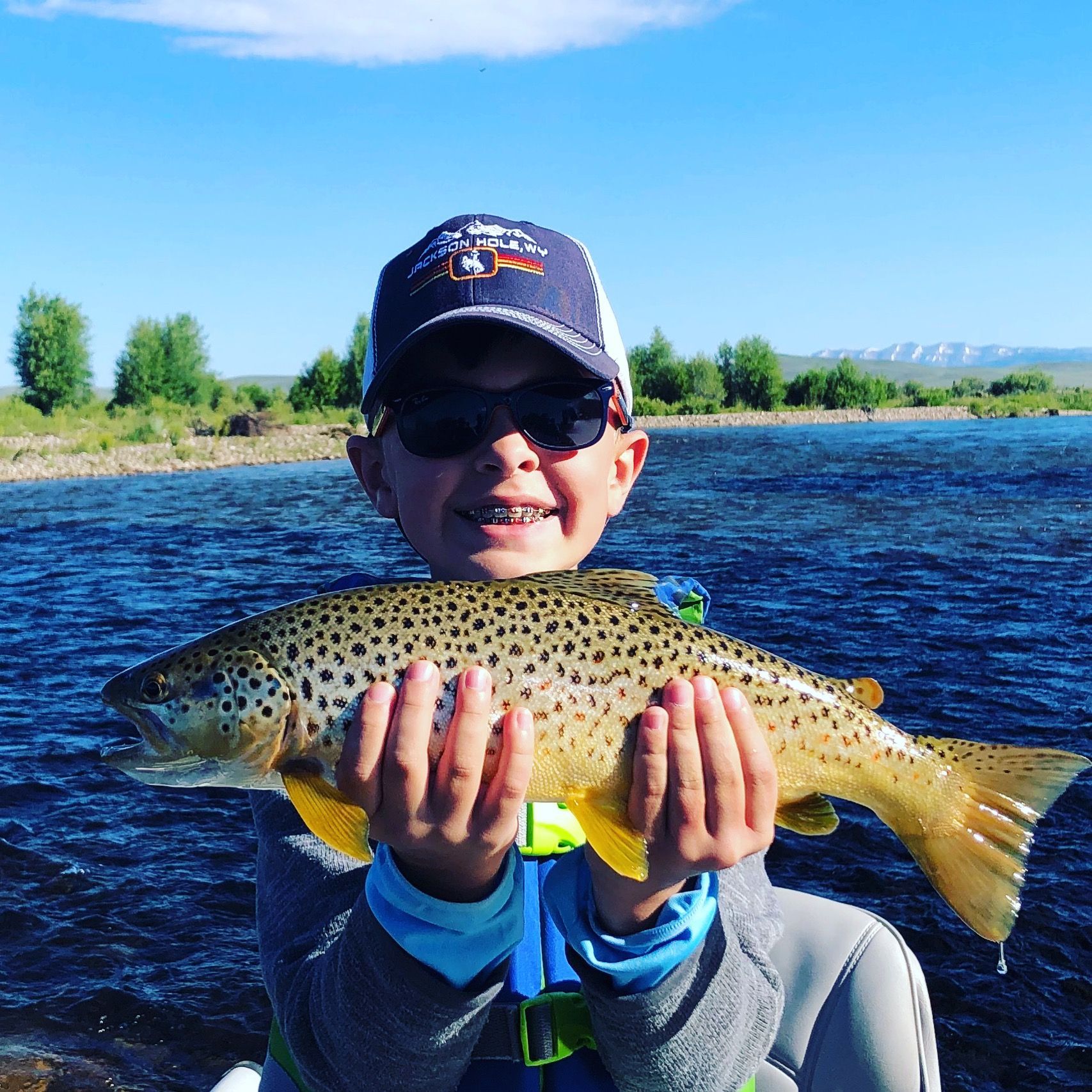
Browns are the easiest fish here to name once you have seen one. The body is a buttery gold to brassy brown, and the spots come in two colors: black spots and rust red spots, many of them ringed with a pale halo. No other trout in these waters shows red spots with halos on a gold body.
The tail settles it. A brown trout's tail is squared off and carries few spots or none at all, which separates it immediately from a rainbow. There is no throat slash.
Behavior is a clue in itself. Browns hold tight to cover, under cut banks, beside logjams, in the shade of a boulder, and they feed hardest in low light. A fish that came out of the darkest slot on the run is more likely to be a brown than anything else.
Rainbow Trout
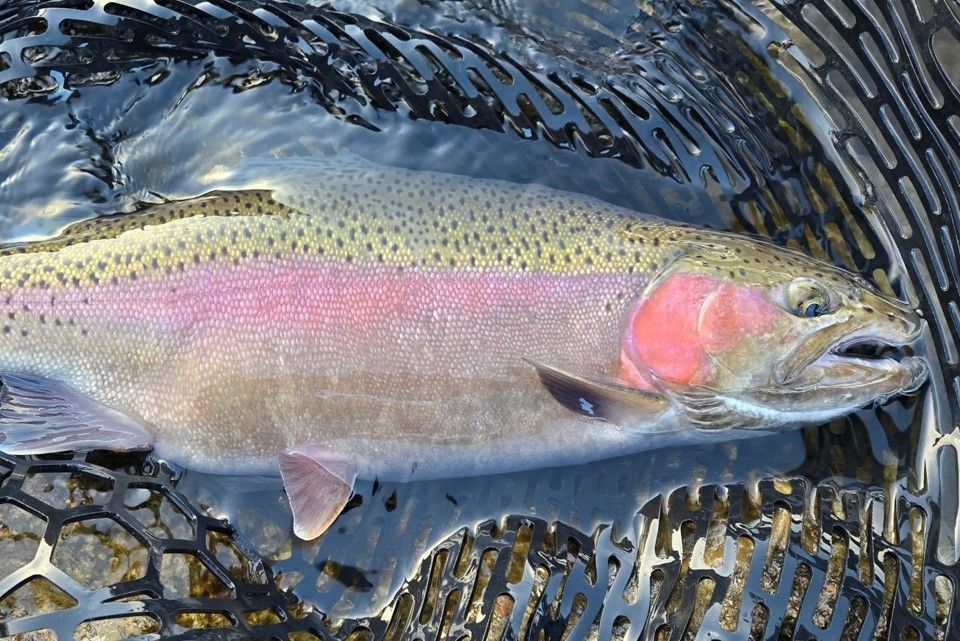
The pink lateral stripe running from gill plate to tail is what most people notice first, and on a bright fish it is unmistakable. Look past it to the spotting: rainbows are heavily covered in small black spots across the back, and crucially those spots continue onto the tail in radiating rows. A spotted tail on a fish with a pink stripe is a rainbow.
Check the throat and you will find nothing there. A clean white lower jaw with no slash is the quickest way to separate a rainbow from a cutthroat when the light is poor.
They also announce themselves in the fight. Rainbows tend to run hard and jump repeatedly, where a cutthroat is more likely to bulldog in the current. That is a soft tell rather than a rule, but experienced anglers often call the species before the fish is close.
Brook Trout
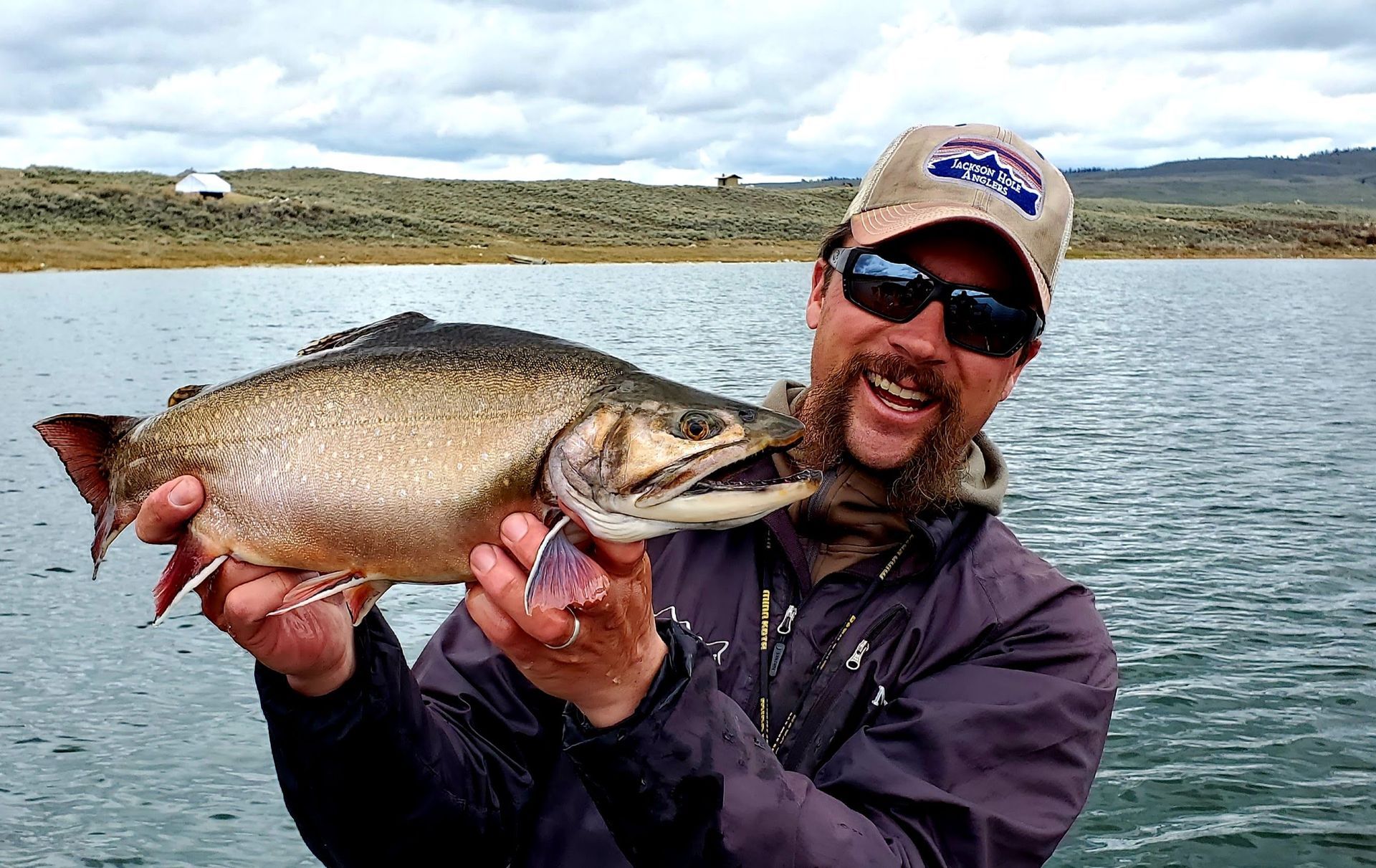
Brook trout are a char rather than a true trout, and they look it. The back is dark olive green and marked with pale, wavy, worm like lines, a pattern called vermiculation that no other fish here has. Along the flanks are red spots surrounded by blue halos, which is as distinctive as markings get.
The lower fins have a crisp white leading edge backed by a black line, and in fall a spawning male turns startlingly orange underneath. Look for them in small, cold, high water: headwater creeks, beaver ponds, and shaded feeder streams rather than the main river.
One caution on those white fin edges. They are often quoted as a cutbow tell, but brook trout show them clearly too, so a white fin margin on its own proves nothing. Read it alongside the vermiculation and the blue haloed spots and there is no confusion.
Lake Trout
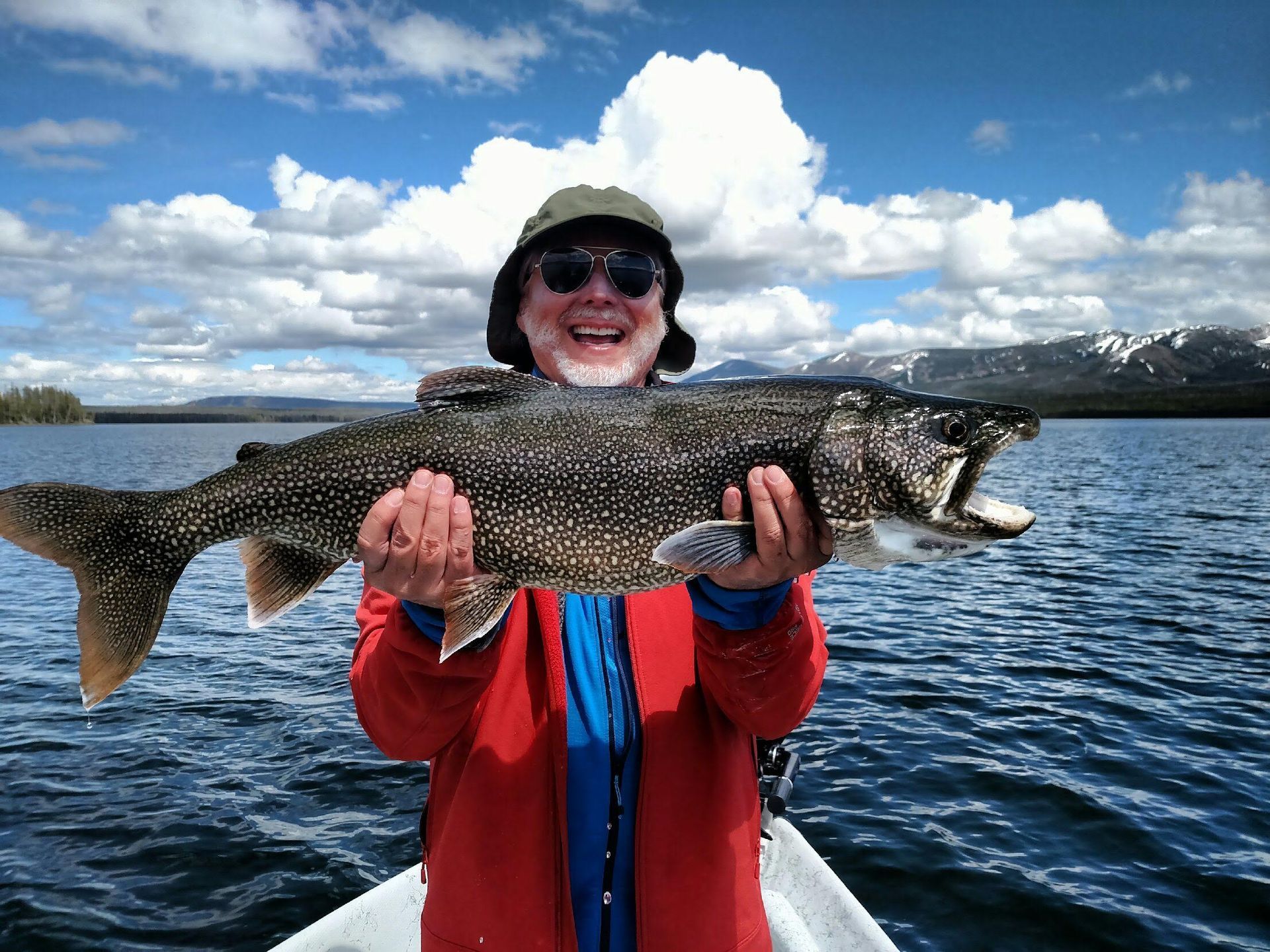
Also a char, and built differently from everything above. The tail is deeply forked, which is the single fastest way to identify one, and the body is grey to grey green scattered with pale cream or off white spots. There are no red spots and no pink stripe.
You are unlikely to meet one while floating a river. Lake trout hold in deep, cold lake water and are a target on the larger lakes rather than an incidental river catch.
How to Spot a Cutbow
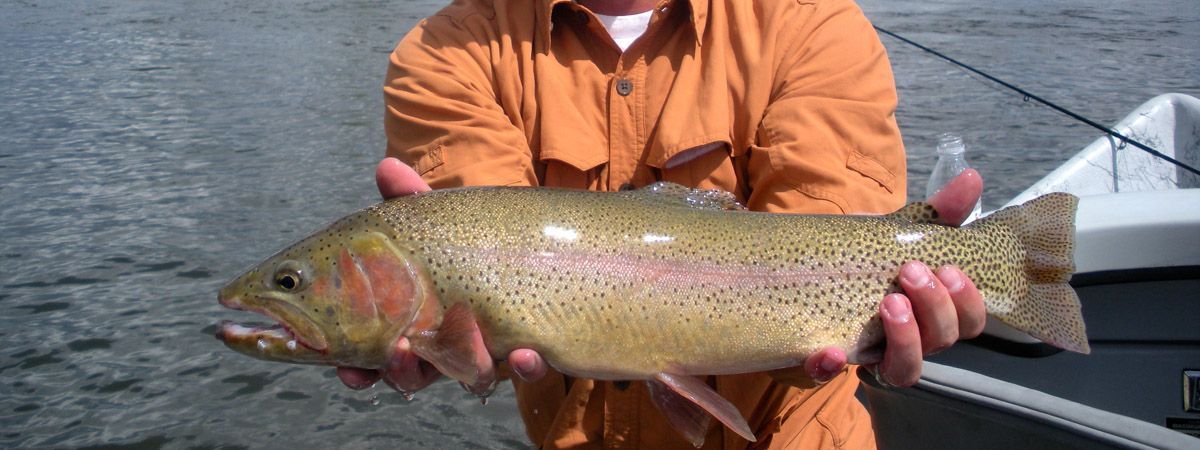
Cutthroat and rainbow trout interbreed, and their offspring are called cutbows. They are common enough on mixed water that every angler here eventually lands one and spends a while staring at it.
A cutbow reads as a fish that cannot decide. There is a throat slash, but it is faint, pale, or broken rather than a clean orange stripe. There is a pink lateral stripe, but it is often muted. The spotting sits somewhere between the two parents. White tips on the fins are the tell many guides use, and they do point toward a cutbow, but only in combination with the faint slash and the pink stripe, since brook trout carry white fin edges as well.
The honest advice is to read the combination rather than hunt for one deciding feature. If a fish shows a partial slash and a stripe together, you have a cutbow, and if you cannot call it with confidence, that uncertainty is the correct answer rather than a failure. Photograph it in the net, release it, and compare later.
Mountain Whitefish, Not a Trout
Sooner or later something silver comes to the net that clearly is not a trout. The mouth is small and points downward, set under a blunt snout, and it is built for picking nymphs off the bottom. The scales are large and obviously silver, the body is a plain grey to bronze without spots, and the tail is forked.
Whitefish get an unfair reputation. They are native to these rivers, they have been here as long as the cutthroat, and they are sensitive to warm water and pollution, which means a river full of them is a river in good condition. Catching them is a sign the water is working, not a consolation prize. They deserve the same wet hands and quick release as anything else in the net.
Which Species Live Where
Water tells you a great deal before you have seen a marking. Knowing which species a given river holds narrows the field to one or two before the fish is even close.
The Snake is finespotted cutthroat water, and that is the fish you should expect on most float trips through the valley. The Salt and the Green run mixed, holding cutthroat alongside brown and rainbow trout, so those are the rivers where identification is genuinely worth practicing and where cutbows turn up.
Flat Creek is its own case. It holds large, notably selective cutthroat in slow, clear water, and the fish there have seen enough flies to be difficult, which is exactly why anglers chase selective cutthroat on Flat Creek. Brook trout favor the small, cold headwater streams and beaver ponds, while lake trout stay in the deep water of the bigger lakes.
Park waters add Yellowstone cutthroat to the list, and they come with their own access rules and season dates. If you are planning a trip around a particular species or a particular river, the practical detail on the valley and the parks sits in the area information for visiting anglers.
Quick Field Identification Checklist
With the fish still in the net and in the water, run three checks in order. It takes about five seconds once you have done it a few times.
- Check the throat. Look under the lower jaw for an orange or red slash. A clear slash means cutthroat. A faint or broken one means you are probably holding a cutbow. Nothing there means rainbow, brown, brook, or lake trout.
- Read the spots. Tiny spots peppered evenly over the whole body means finespotted cutthroat. Larger spots bunched toward the tail means Yellowstone cutthroat. Black and rust red spots with pale halos means brown. Fine black spots running into the tail, with a pink stripe, means rainbow. Red spots with blue halos on a vermiculated back means brook. Pale cream spots mean lake trout.
- Check the tail and fins. Squared and nearly spotless means brown. Spotted in radiating rows means rainbow. Deeply forked means lake trout, or whitefish if the mouth points down. White leading edges on the lower fins point to brook trout, or support a cutbow call when a faint slash and pink stripe are also present.
Then let it go. Nothing on that list requires holding a fish in the air.
Handling Native Cutthroat Responsibly
Identification and handling belong together, because the moment you spend naming a fish is a moment it spends in your care. Keep it in the water while you look. A trout resting in a submerged net can be examined for as long as you like at no cost to the fish, and every marking described above is visible through clear water.
The rest is simple. Pinch your barbs so unhooking is quick, carry a rubber mesh net rather than knotted nylon, wet your hands before every touch, and keep air exposure to ten seconds or less if you lift the fish at all. On warm afternoons, skip the photo entirely. Trout stress climbs well before the 68 degrees often quoted, from around 61 degrees for cutthroat, rainbow, and brook trout, and a fish that has fought hard in warm water has no margin for a long session on the surface.
This matters more for native cutthroat than for anything else in the river. These are wild, self sustaining populations, not restocked each spring, and their numbers reflect how carefully they are released season after season. Every fish that goes back in good shape is still in the river next year.
Chase Cutthroat with Jackson Hole Anglers
Naming trout gets much faster with someone beside you who does it all day. Our guides call these fish from the boat before they are in the net, and they know which water is most likely to produce a native finespotted cutthroat on a given day, which is not the same water every week. A day on the river covering the Snake and its neighbors is also the most efficient way to see several species in one outing, and private guided fishing trip options are built around exactly that kind of day.
If you are trying to work out which river gives you the best chance at a particular species, or when in the season to come for it, it is worth a conversation before you book flights. You can speak with a local guide about what the rivers are holding and how they tend to fish through the year.
Either way, learn the throat slash first. Everything else follows from there.
Recent Posts